How to Bathe Your Parrot: Methods, Benefits & Seasonal Considerations

Parrots, both in the wild and in captivity, genuinely love to bathe. Birds are very clean animals. If your pet parrot at home doesn’t bathe, it’s not because they dislike it; it might be because the bathing method you’re providing isn’t suitable, and over time, they’ve developed a resistance to bathing. So, how do you correctly bathe your parrot?
Benefits of Regularly Bathing Your Parrot:
Keeps Feathers Clean:
Regular bathing helps clean dust, debris, and parasites from your parrot’s feathers. This keeps their plumage vibrant and shiny, preventing skin diseases and parasite infestations.
Helps Regulate Body Temperature:
A parrot’s body temperature is typically between 40-42 ℃(107-112 °F). In hot summers, parrots usually regulate their body temperature by bathing and open-mouth breathing
Maintaining a parrot’s uropygial gland health:
The parrot’s uropygial gland is located subcutaneously on the dorsal side of the tail base. It secretes oil, which the parrot then picks up with its beak and applies to its feathers. This makes the feathers tougher, increases their elasticity, enhances flight ability, and gives the feathers waterproof properties.
The parrot’s uropygial gland is key to maintaining feather health. After bathing, parrots groom their feathers to promote oil secretion from the uropygial gland, preventing uropygial gland inflammation.
Choosing the Season/Time for Bathing Your Parrot:
Parrots need to bathe year-round. Even in cold winter weather, they can bathe, but be aware that in winter, you’ll need to dry your parrot’s feathers afterward to prevent them from getting sick.
Typically, it’s best to bathe your parrot on a sunny day, either at noon or in the afternoon. You can use warm water in winter, but for other seasons, regular tap water (cold water) is suitable.
How often should I bathe my parrot?
Generally, it is recommended to bathe parrots once every 1 to 2 weeks, and more frequently in the summer.
Each parrot’s enthusiasm for bathing varies. My Pyrrhura particularly loves bathing and almost bathes daily in the summer, but my African Grey Parrot doesn’t like bathing very much and usually only bathes once a week.
Parrots are usually bathed using the following methods:
Shower:
This method is typically more suitable for larger parrots, such as Macaws, African Greys, and Amazon Parrots.
First, install a bird perch in the bathroom, usually attached to the wall with suction cups, at a height that doesn’t exceed your shoulders.
Initially, let your parrot get used to the water flow; do not spray the parrot directly, as this can scare them. You can let them watch you shower, allowing some water to splash onto them. As they slowly become accustomed to it, try directing more water towards their body. Once they get used to it, they will begin to love showering in this way.
Misting:
Most pet parrots originate from tropical rainforests, where morning mist and humidity are abundant. In the wild, parrots often get their feathers wet and bathe by flapping their wings against water droplets on leaves. In a captive environment, you can use a spray bottle to mist your parrot with atomized water. Most parrots enjoy this method.
Shallow Water Dish:
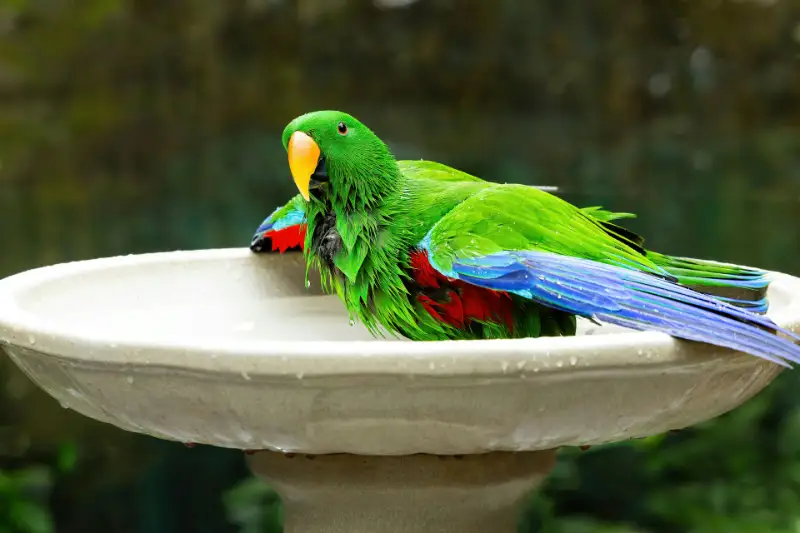
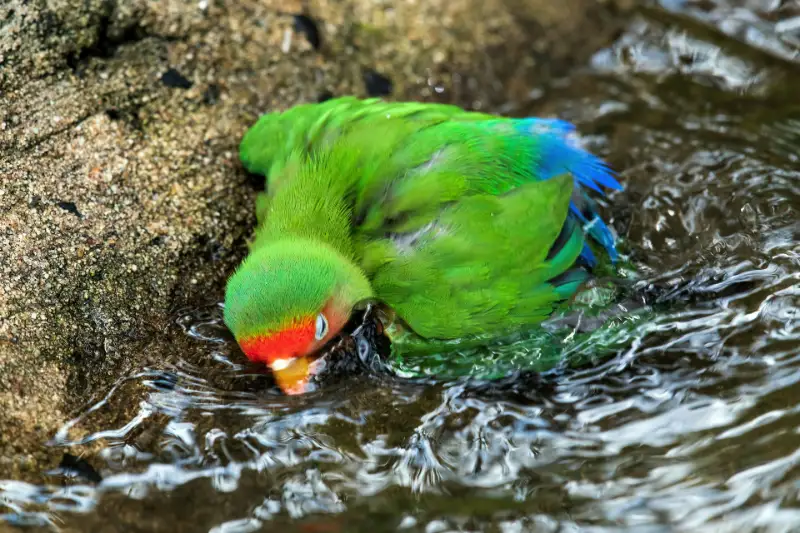
Wild parrots might find a small puddle and splash their feathers in the shallow water before shaking dry. This method is very easy to implement. Prepare a shallow container that is longer than your parrot’s body length and can fully accommodate them. It should not be too deep; many timid parrots are afraid of entering deep basins. The water level in the basin should only be deep enough to cover your parrot’s feet. Let your parrot explore it themselves. Especially in summer, you’ll be surprised to find that no guidance is needed; they instinctively know how to bathe this way.